


Funk Studio - Make Your Mods
3.4215.00 Reviews
App Specs
- Version
- 1.0.13
- Updated On
- License
- Free
- Downloads
- 100,000+
- Developer
- HYOCT
- Categories
- Music
- Platform
- Android
Screenshots
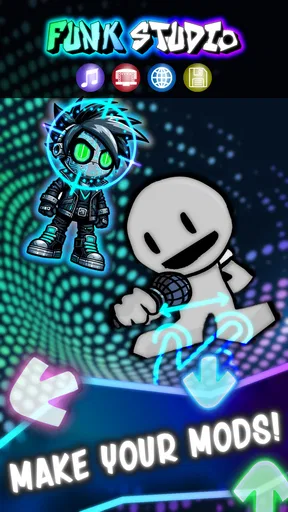
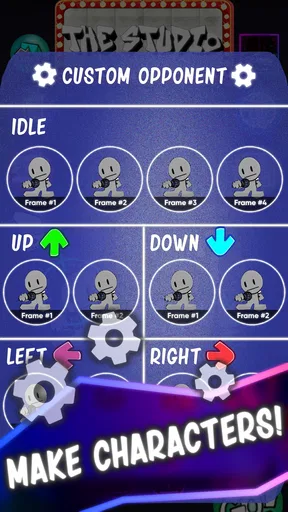
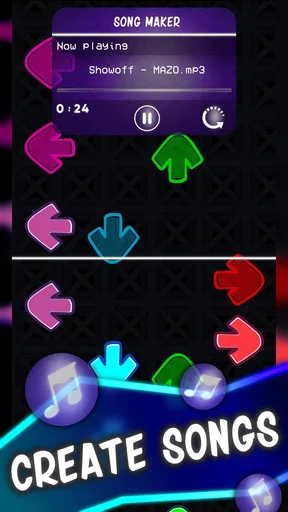
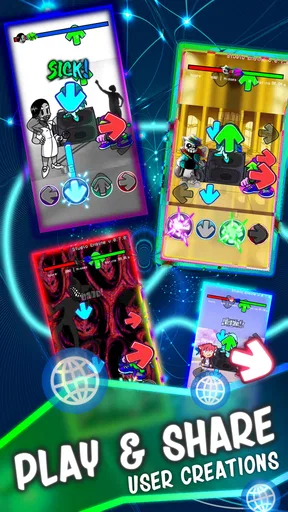
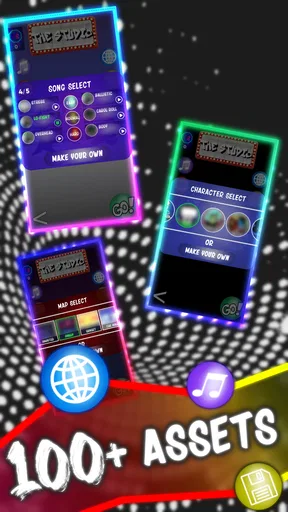
 Analysis by AppCompare
Funk Studio - Make Your Mods caught my attention because it treats music-making like a playable creative activity rather than a traditional production lesson. Made by HYOCT, this free music game lets me build and share funky modifications through a codeless engine and an online platform. That combination makes the first session feel approachable: I can experiment with ideas without needing to learn programming or open a complicated digital audio workstation.
The important question, though, is what happens after the novelty of making a few unusual creations wears off. My experience is that Funk Studio has a clear first-week appeal, especially for curious beginners and players who enjoy tinkering, but its lasting value depends heavily on whether I enjoy repeating a cycle of experimenting, polishing, sharing, and discovering other people’s work. It is not trying to replace a full music-production app, and judging it by that standard would be unfair. Its real test is whether its playful creative loop is strong enough to become a habit.
What the first week feels like
The strongest part of the opening experience is the low barrier to entry. A codeless engine gives the game a gentler starting point than tools that expect me to understand tracks, effects, scripting, or formal music theory. I can approach it with the mindset of a player: try something, listen to the result, adjust it, and try again. That makes it suitable for short sessions when I want to make something expressive without committing to a serious recording project.
I also like the distinction between making a mod and simply consuming music. Many music apps are built around listening, while conventional creative tools can feel more like work. Funk Studio sits between those two uses. It gives me a reason to interact with sound, but frames that interaction as play. For someone who likes rhythm games, remix culture, or playful digital construction, that framing is more inviting than a blank timeline and a long list of technical controls.
The online side adds another reason to return during the early days. Sharing a creation changes the experience from a private experiment into something that can be shown to other people. Playing community-made work can also provide ideas when my own projects feel limited. This creates a useful loop: I make something, see what others are doing, borrow inspiration in the broad creative sense, and return to my own experiments with a clearer direction.
That loop is also where I noticed the first trade-off. Sharing is motivating only when I am comfortable with the social side of creation. If I prefer making music privately, the online platform may feel less important. Likewise, if I expect a large, constantly refreshing library of polished content, the experience may depend too much on how active and inventive the community feels at the moment I use it.
For a realistic everyday scenario, I can imagine opening it during a short break, building a small musical idea, and leaving it unfinished until later. The codeless approach makes that kind of stop-and-start use more practical than a demanding production suite. I would not choose it for a deadline-driven soundtrack or a carefully mixed song, but I would choose it when I want a compact creative distraction that still produces something I can play back and share.
Worth Reading Before You Choose

Flipboard Shows What News Apps Must Do Beyond the Feed

Switching to Android Auto Means Rethinking Your Driving Routine

Google Calendar Makes a Crowded Week Easier to Manage

Ludo King Makes the Most of the Minutes Between Plans

Baby Panda World Brings Quick Play to Modern Phones, but Its Game Library Feels Busy

ESPN’s Live Game View Makes Following Close Games Easier
Why beginners may connect with it
The absence of conventional coding is more significant than it may sound. A beginner can focus on relationships between sounds and behavior instead of being blocked by syntax. That makes the game a reasonable introduction to interactive musical thinking. It may help a curious player understand that a musical idea can be assembled from parts and tested repeatedly, even without turning the experience into a formal programming course.
It is also a better fit for people who learn by immediate feedback. Reading instructions about composition can be abstract, but changing an element and hearing the result gives the decision a direct consequence. I found that kind of feedback encourages small experiments. Rather than planning a complete piece before starting, I can make one change at a time and judge whether it improves the mood I am trying to create.
Parents and younger players may appreciate the Everyone content rating, although that rating should not be confused with a guarantee that every user will enjoy the creative demands. The game is accessible in age terms, but it still asks for patience and curiosity. A player who wants constant action may find the building process slower than expected, while someone who likes arranging and revising can get much more from it.
Where the early excitement starts to settle
During the first few sessions, almost every discovery feels rewarding because I am learning how the creative system responds. Later, the same freedom can become less exciting if I do not set myself a personal goal. This is a common issue with open-ended tools, but it matters particularly here because the game’s appeal is tied to making things rather than completing a long sequence of conventional levels.
My practical advice is to begin with a narrow challenge instead of trying to make an impressive mod immediately. I might aim for a short, recognizable mood, a surprising transition, or a version that sounds deliberately different from my first attempt. Small constraints make the codeless engine feel more focused and help me judge progress. Without a constraint, I can spend time changing elements without knowing whether the result is moving in a useful direction.
Another useful habit is to save or share only after listening several times, rather than treating the first amusing result as finished. The initial surprise can hide repetition or an awkward balance. A brief pause gives me a better sense of whether the creation remains enjoyable after the novelty disappears. That simple review step is one of the differences between casually playing with the system and developing a sustainable creative routine.
Does it keep earning a place over time?
I judge a creative game’s staying power less by how much I can do on day one than by whether it gives me a fresh reason to return after the first experiments. Here, I’d pay attention to whether making and sharing still feels enjoyable once I’ve learned the basic loop, and whether other players’ creations spark ideas rather than feel like something I’m expected to keep up with. That distinction leads naturally to the question of how fair the experience feels when spending enters the picture.
The month-to-month creative loop
Long-term value comes from variation. Funk Studio can remain interesting if I use the online platform as a source of prompts rather than merely scrolling through other people’s work. I can return with a specific intention: make a response to an idea I heard, rebuild an old mod with a different feel, or create something designed for a friend to try. These personal projects give the game structure when the basic act of experimenting no longer feels new.
The sharing feature is especially useful when I treat it as part of the creative process instead of the final reward. Showing a mod can reveal whether the idea works for someone who did not watch me build it. If another player understands the intended character quickly, that is helpful feedback. If the result feels confusing or flat outside my own session, I know that the concept may need refinement. The platform therefore has value even when it does not provide formal lessons or detailed critique.
Still, I would not call it an automatic monthly habit for everyone. Its recurring value is strongest for players who enjoy producing variations. If I make one mod, share it, and expect the app to supply a complete progression system afterward, I may run out of reasons to return. The game rewards self-directed goals more than it rewards passive consumption.
This is where it differs from the usual alternatives. A streaming music service offers endless listening with almost no creative effort. A rhythm game usually gives clearer goals, faster feedback, and a defined sense of progression. A full music workstation offers deeper control and more serious editing, but demands more time and technical knowledge. Funk Studio occupies the middle ground: more interactive than listening, less demanding than production software, and more open-ended than a conventional score-based music game.
That middle position is both its identity and its limitation. I would recommend it to someone who wants to play with musical ideas, not to someone who needs professional recording control. If I already use a serious audio workstation, this game may work as a sketchpad or a playful change of pace, but it will not offer the same depth. If I mainly want to compete for high scores, a dedicated rhythm title is likely to provide a stronger long-term structure.
Maintenance is part of the experience
The maintenance burden is not technical in the way it is with a complex production setup. The bigger responsibility is creative maintenance: keeping track of ideas, revisiting unfinished work, and deciding what deserves another session. Because the game is open-ended, I need to supply some of the organization that a level-based game would normally provide.
I find it helpful to treat each session as having a clear endpoint. I might stop after creating a rough version, after testing a particular change, or after preparing something to share. This prevents the common problem of endlessly tweaking a piece because there is no obvious finish line. It also makes returning easier, since I know what the next session is supposed to accomplish.
The online platform adds another kind of maintenance. A shared creation is not just a file I forget about; it becomes part of how I present my taste and experimentation. That can be enjoyable, but it may also make me overthink simple projects. My advice is to share experiments as experiments and reserve perfectionism for the few ideas that genuinely deserve more time. Otherwise, the social layer can turn a playful tool into an uncomfortable performance.
There is also a practical device consideration. The game requires Android 6.0 or later, and the current version is 1.0.13. That makes checking compatibility worthwhile before installing on an older phone or tablet. On a suitable device, I would still keep expectations realistic: a music-focused creative game may be more comfortable with headphones and a quiet environment, because small sound differences are easier to judge when the surrounding noise is low.
What can cause fatigue
The main source of fatigue is repetition without a new question to answer. Building, listening, and sharing can be satisfying, but the loop may feel thin if every session follows the same pattern. I avoid that by changing the purpose of each return. One session can focus on rhythm, another on contrast, and another on making a creation that is intentionally simple. The game does not need to provide all the variety if I bring a little structure myself.
Another possible frustration is the gap between a fun idea and a polished result. Codeless control makes experimentation easier, but it does not automatically make every combination sound good. I still need to listen critically and accept that some attempts will be disposable. That is not a flaw in the concept, but it can disappoint players who expect immediate musical quality from every arrangement.
The rating of 3.4 from around 1.5 thousand ratings reflects a mixed public response rather than universal enthusiasm. I read that as a reason to approach the game with the right expectations. It is not a guaranteed fit simply because it is free or music-based. The free entry helps reduce the risk of trying it, but the personal creative style it demands will determine whether it stays installed.
There are also optional purchases, priced at $1.99 to $2.99 per item. I would treat those as a later decision, not part of the initial evaluation. The sensible approach is to spend time with the free experience first and ask whether I am returning regularly, finishing ideas, and using the sharing platform. If those habits are not forming, paying for extras is unlikely to solve the underlying problem.
Who should install it, and who should skip it?
I think Funk Studio is a good choice for an imaginative beginner who wants to explore music without facing the intimidating layout of a professional tool. It also suits players who enjoy user-created content and like seeing how other people interpret the same creative system. Teachers, parents, or hobby groups could use it as a light activity for discussing sound, structure, and iteration, provided the goal is exploration rather than formal musical training.
I would be more cautious recommending it to someone who wants a complete song editor, advanced mixing, detailed instrument control, or a dependable professional workflow. The game’s charm comes from its accessible, playful construction, so choosing it for precision production would create the wrong expectations. I would also steer away from it if my main motivation were competition, because the online sharing element is not the same as a structured leaderboard-driven game.
People who dislike unfinished experiments may need patience. The best results are likely to come from accepting that some creations are sketches, tests, or amusing failures. That mindset is not optional for long-term enjoyment; it is part of the bargain. The game gives me room to explore, but it does not promise that every exploration will lead somewhere memorable.
My long-term verdict
After the first-week excitement fades, Funk Studio remains worthwhile when I use it as a small creative workshop rather than expecting it to behave like a complete music app or a conventional game. Its codeless engine makes the entry point friendly, while the online platform gives successful ideas somewhere to go. Those are meaningful strengths, particularly for beginners who want to make and share rather than only listen.
Its weaknesses are tied to the same design. Open-ended creation can lose momentum, community value depends on how much I enjoy sharing and exploring, and polished results require more patience than the simple premise might suggest. The free price makes trying it easy, but free access does not remove the need for a personal routine. I would not keep it installed just because it is unusual; I would keep it if I regularly find new prompts for it.
For me, the deciding test is simple: after making a few mods, do I still have an idea I want to try tomorrow? If the answer is yes, the game has earned a place as a playful music-making companion. If the answer is no, a rhythm game will probably offer stronger immediate structure, while a full production app will offer more room to grow technically. Funk Studio is at its best when curiosity, not completion, is the reason I open it.
With over 100 thousand installs and a free entry point, it has clearly attracted a substantial audience, but popularity alone does not guarantee lasting value. My recommendation is to approach it as a low-pressure creative experiment, use headphones when judging details, set small goals, and delay optional purchases until the habit proves itself. For the right player, that is enough to turn a novelty into a recurring source of musical ideas; for everyone else, the limitations will become apparent fairly quickly.
Pros
- Simple tools make basic mod creation approachable for beginners.
- Supports creative experimentation without requiring advanced coding skills.
- Useful for testing custom ideas before sharing them with others.
- The focused interface keeps mod-related features easy to find.
- Can help users learn how game assets and modifications work.
Cons
- Compatibility may vary between games
- devices
- and operating system versions.
- Advanced creators may find the available editing options too limited.
- Some mods may require extra files or setup outside the application.
- Custom content can occasionally cause crashes or unexpected behavior.
- Sharing or exporting creations may depend on the supported game format.
FAQs for Funk Studio - Make Your Mods
What is Funk Studio - Make Your Mods?
Funk Studio - Make Your Mods is a creative tool designed for users who want to build and customize their own content, particularly mods and related assets for rhythm-based games. Its interface focuses on making the creation process more accessible, allowing beginners to experiment while giving experienced users options to personalize characters, music, visuals, and gameplay elements. The exact features may vary by device and app version.
Do I need previous modding or programming experience to use Funk Studio?
No advanced programming knowledge is generally required to get started with Funk Studio. The app is aimed at users who prefer a visual and guided creation process rather than editing everything manually through code. However, understanding basic file management, timing, audio formats, and game assets can make the experience easier. Beginners may need time to learn the available tools and understand how their changes affect the final mod.
Can I create complete mods with custom music, characters, and artwork?
Funk Studio is intended to help users personalize different parts of a mod, such as visual elements, characters, songs, charts, or other game-related content, depending on the version and supported format. While it can simplify many creative tasks, it may not replace a full desktop development environment. Before downloading, users should check the current feature list and confirm whether the specific game and asset types they want to edit are supported.
Is Funk Studio - Make Your Mods free to download and use?
The app may be available as a free download, but some features, tools, content packs, or export options could depend on the version, platform, or in-app purchase model. Availability can also differ between Android and iOS. It is recommended to review the official store listing before installing, especially the pricing details, advertisements, subscription information, and any requirements for unlocking advanced creation or sharing features.
Can mods created in Funk Studio be shared or used in the original game?
Sharing and compatibility depend on the type of mod created, the target game, and the export options provided by the app. Some projects may be saved locally or shared as files, while others might require additional steps, compatible folders, or another tool before they work in a game. Users should also respect the original game's rules, copyright restrictions, and community guidelines when distributing music, artwork, or modified content.


